Permafrost: The Ground That Remembers
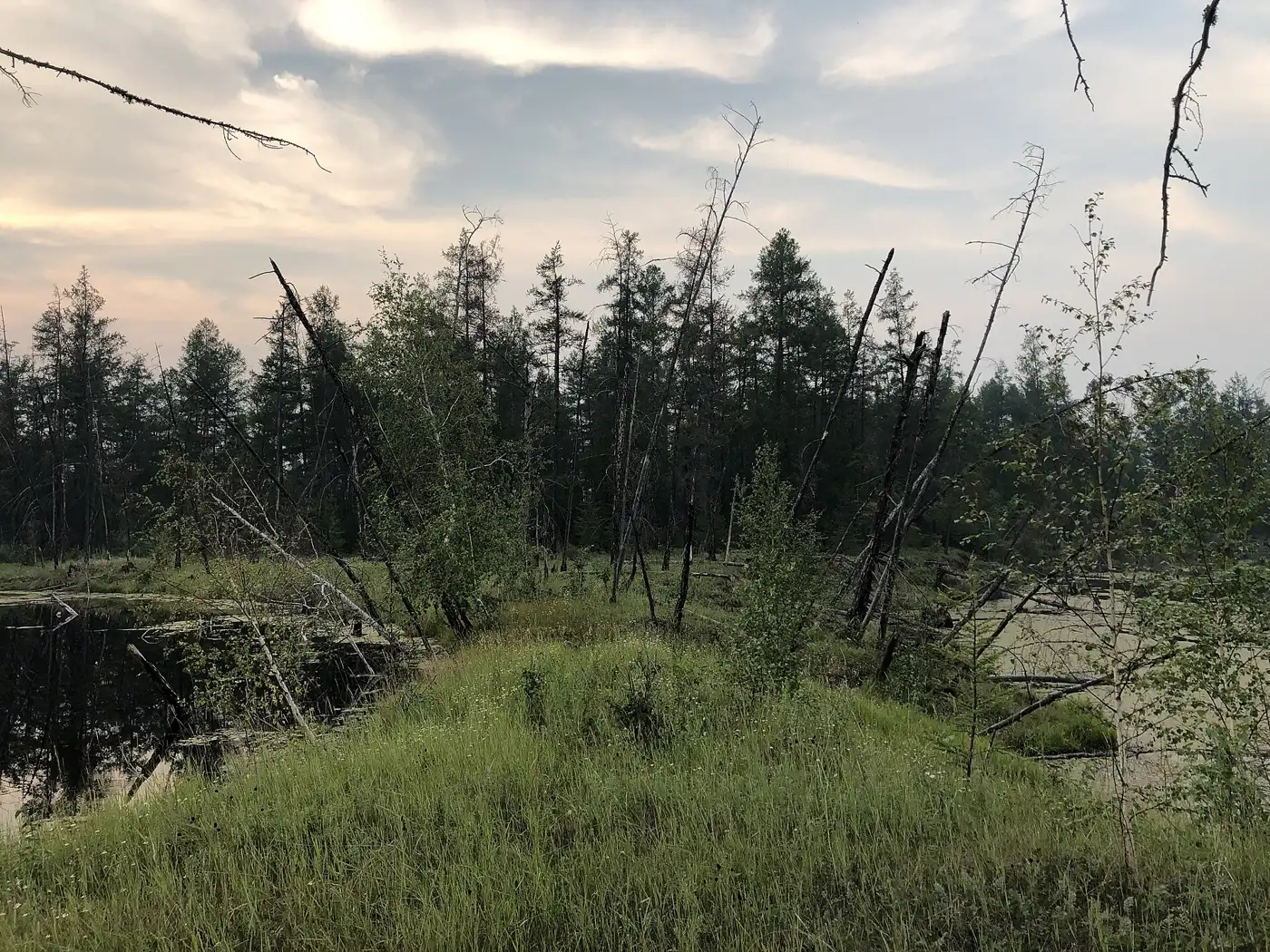
The first time I walked through a "drunken forest" I thought a storm had passed. Larches leaned in every direction, some lying almost flat with their roots still clinging to a lump of peat. There had been no storm. The ground itself was moving, slowly, as the ice inside it melted.
What permafrost actually is
Permafrost is not a type of soil. It is a temperature condition: any ground — rock, gravel, peat or silt — that stays at or below 0 °C for at least two consecutive years. Roughly a quarter of the exposed land in the Northern Hemisphere sits on it. In parts of Siberia it reaches more than 1,400 metres deep, a frozen archive built up over hundreds of thousands of years.
On top sits the active layer, the skin of ground that thaws each summer and refreezes each autumn. In the high Arctic it may be only 30 centimetres deep; farther south it can reach two metres. Almost all tundra life — roots, burrows, meltwater pools — is crowded into that thin, seasonal band.
Why it is changing
The Arctic is warming faster than anywhere else on Earth, and the active layer is deepening. When ice-rich ground thaws, it does not just soften; it collapses. The water drains away and the surface slumps, forming pits, ponds and the tilted trees that gave the drunken forest its name. Scientists call these features thermokarst.
The consequences run deeper than scenery. Permafrost holds enormous amounts of ancient carbon in the form of frozen plant matter that never fully decomposed. As it thaws, microbes wake up and begin to feed, releasing carbon dioxide and methane. The worry is a feedback loop: warming thaws the ground, the ground releases greenhouse gases, and those gases drive more warming.
Reading the ground
You learn to read permafrost the way sailors read water. Polygons of cracked ground mean ice wedges below. A sudden bright-green stripe across a brown slope is often a line of water tracking along the top of still-frozen soil. Palsas — low mounds of peat with a frozen heart — rise a metre or two above the surrounding mire, and when they finally collapse they leave a ring-shaped pond.
For anyone building in the North, permafrost is both foundation and hazard. Roads buckle, pipelines flex, and houses in some towns now stand on adjustable steel piles that can be re-levelled as the ground shifts. Traditional builders knew to raise structures on posts and let cold air circulate underneath; modern engineering has had to relearn the lesson.
Why it matters to a hiker
Practically, thawing permafrost makes summer tundra wetter and less predictable. Ground that was firm one July can be a quaking mire the next. I have learned to treat vivid green hollows with suspicion, to carry trekking poles for probing, and to plan routes along gravel eskers and rocky ridges where the footing stays reliable.
But there is wonder in it too. To stand on permafrost is to stand on time — on summers that fell as snow before the first cities were built. The ground remembers, and lately it has begun, quietly, to speak.