Reindeer Herding: A Living Tradition of the Tundra
You hear a large reindeer herd before you see it: a low clatter of hooves, the click of tendons, the occasional grunt. Then the ridge line dissolves into movement as hundreds of animals pour down a slope, steered by a handful of people and a few quick dogs.
People of the deer
Reindeer herding stretches across the whole northern rim of Eurasia and into Fennoscandia — the Sámi of Norway, Sweden and Finland; the Nenets of the Yamal peninsula; the Evenki, Chukchi and many others across Siberia. The details differ, but the logic is shared: in a land too cold and poor for farming, a herd of reindeer turns lichen and sedge into food, clothing, transport and trade.
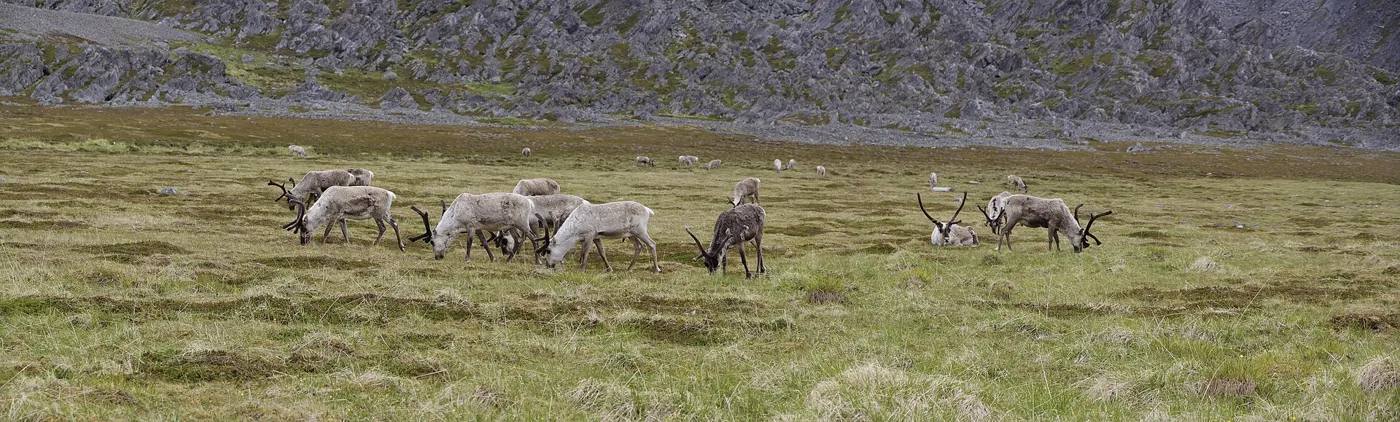
Reindeer are only semi-domesticated. They are not penned or fed; they roam and graze as wild animals do, and the herders move with them. In summer the animals seek high, breezy ground to escape insects; in winter they drift to areas where the snow is soft enough to dig through for lichen. A herding family's year is shaped entirely by that rhythm.
The great migrations
Some Nenets families on Yamal still make one of the longest overland migrations of any herding people, travelling more than a thousand kilometres a year between winter forests in the south and summer pastures near the Arctic coast. Their homes — conical tents of poles and reindeer-hide or canvas — are built to be struck and loaded onto sledges within an hour.
Everything has a use. Hide becomes clothing and tent cover; sinew becomes thread; antler and bone become tools and toggles. A well-made fur coat, worn with the hair inward against another layer worn hair-outward, keeps a person alive at temperatures that would be lethal in modern synthetics alone.
Pressures on the pasture
Herding has never been easy, but it faces new strains. On Yamal and elsewhere, gas and oil development fragments the pastures and cuts migration routes with roads and pipelines. Warmer, wetter weather brings a particular danger: rain-on-snow events, where rain falls on the snowpack and freezes into a hard crust the animals cannot break through to reach the lichen beneath. A single bad icing can starve tens of thousands of reindeer.
Lichen itself is slow. The mats that reindeer depend on can take decades to regrow after heavy grazing or fire, so overused pasture does not simply bounce back. Herders manage this with constant movement, but shrinking land makes movement harder.
Why it endures
Despite all of it, herding persists — not as a museum piece but as a working life that many families actively choose. It carries language, craft and an intimate knowledge of weather and animals that no app can replace. Spend a day helping to turn a herd, cold to the bone and useless compared to a twelve-year-old on skis, and you understand that this is not folklore. It is expertise, passed down because it works.