Two Icons of the Tundra: Snowy Owl and Musk Ox
Some animals belong so completely to a landscape that they come to stand for it. On the open tundra, two do so more than any others: the snowy owl, pale as the snow it hunts over, and the musk ox, a living remnant of the Ice Age.
The snowy owl
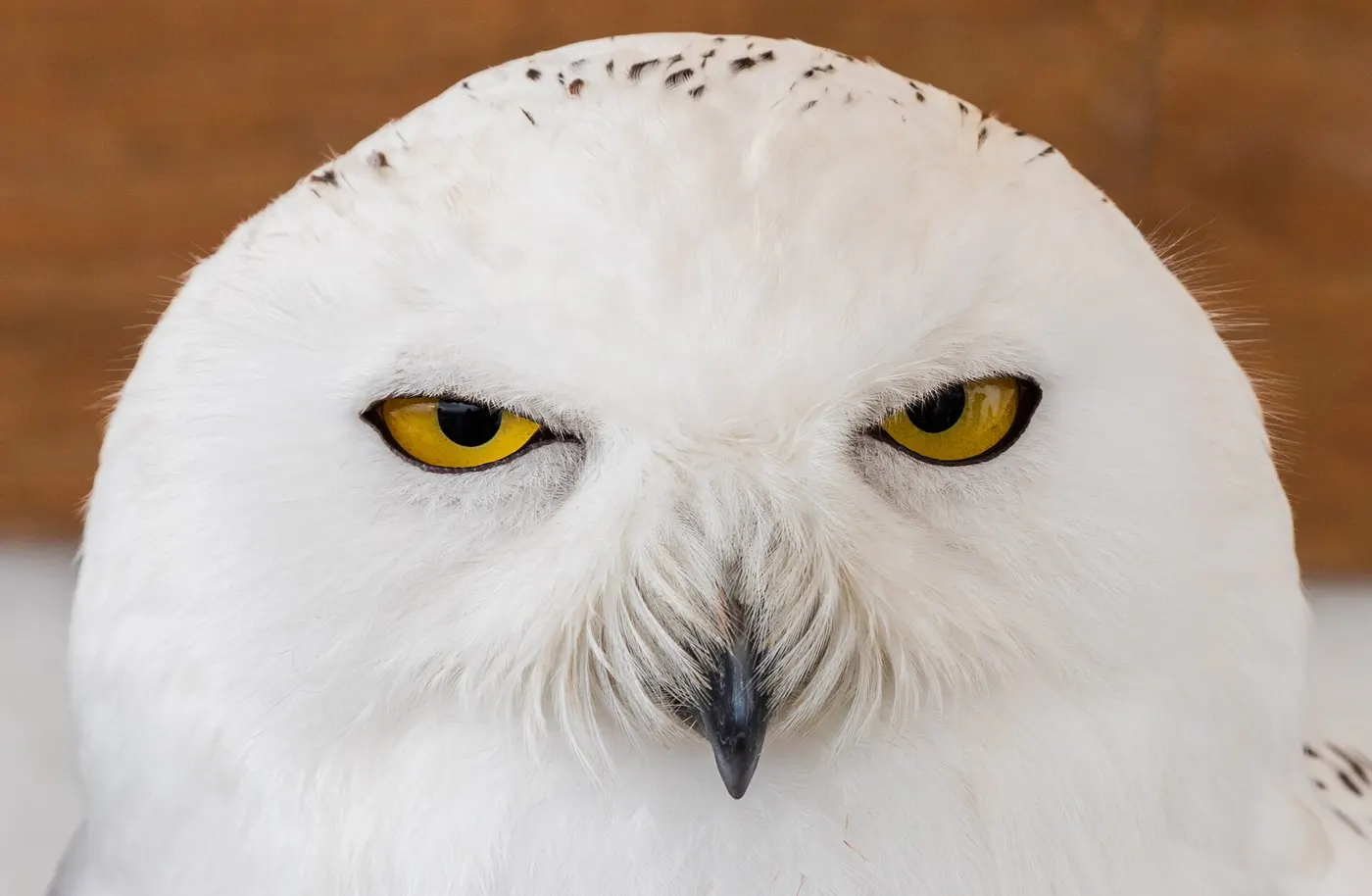
The snowy owl is one of the heaviest owls in the world, and among the most striking — males almost pure white, females and young flecked with dark bars. Unlike most owls it is active in daylight, which it must be, since the Arctic summer has no night. You often spot one first as an improbably white lump on a hummock, sitting motionless, scanning the ground.
Like the arctic fox, the snowy owl lives and dies by lemmings. In a peak rodent year a pair may lay a large clutch and fledge many young; in a poor year they may not breed at all. This drives the species' most remarkable habit: it is nomadic, wandering huge distances between seasons to wherever the rodents are abundant. In exceptional winters, when northern populations boom, snowy owls "irrupt" far to the south, turning up in farm fields, airports and coastlines where birdwatchers travel for days to see them.
They nest on the open ground, scraping a shallow bowl on a rise with a good view, and defend it fiercely — large predators and curious humans alike have been driven off by a diving owl. To watch one lift from the tundra on broad silent wings, low and deliberate, is to understand why the bird has captured imaginations far beyond its range.
The musk ox
If the snowy owl is elegance, the musk ox is sheer endurance. Despite the name and the ox-like bulk, it is more closely related to sheep and goats, and it has walked the North since the time of mammoths. Its survival secret is its coat: a layer of long, coarse guard hairs hanging almost to the ground over an undercoat called qiviut, one of the warmest and finest natural fibres known. So well insulated are they that musk oxen can stand out a blizzard where other large animals would perish.
Their famous defence is the circle. Threatened by wolves, a herd forms a tight ring or line with the adults facing outward, horns lowered, and the calves sheltered behind. Against wolves it works superbly. Against rifles it was a catastrophe, and hunting wiped the species from large parts of its range before protection and reintroduction brought it back to places like Norway's Dovrefjell, Alaska and Greenland.
Up close a musk ox is both comic and formidable — a shaggy brown haystack that can move with startling speed and is best admired from a respectful distance, especially a bull in the autumn rut.
Watching them well
Both animals reward patience and distance. Carry binoculars or a long lens, move slowly, and never crowd a nesting owl or a musk ox herd. Give them room and you may be rewarded with the sight that stays with every tundra traveller: a white owl against a grey sky, or a ring of ancient animals holding its ground on a windswept plain.